
New YorkCNN —
OpenAI CEO Sam Altman says the world may be on the precipice of a “fraud crisis” because of how artificial intelligence could enable bad actors to impersonate other people.
“A thing that terrifies me is apparently there are still some financial institutions that will accept a voice print as authentication for you to move a lot of money or do something else — you say a challenge phrase, and they just do it,” Altman said. “That is a crazy thing to still be doing… AI has fully defeated most of the ways that people authenticate currently, other than passwords.”
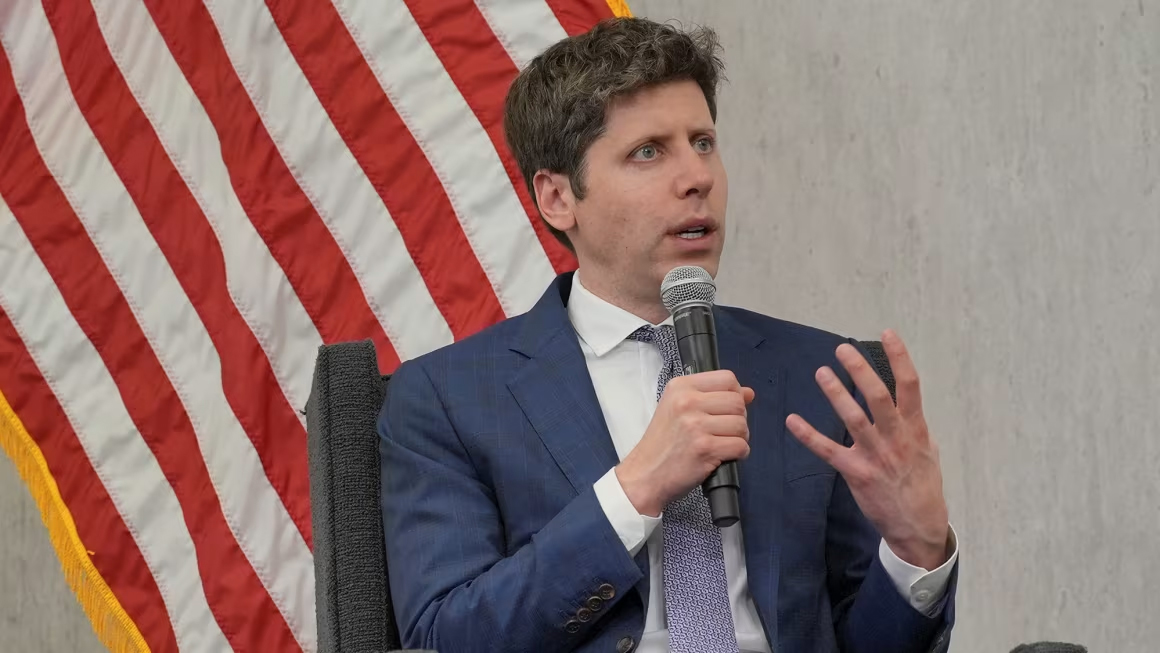
The comments were part of his wide-ranging interview about the economic and societal impacts of AI at the Federal Reserve on Tuesday. He also told the audience, which included, representatives of large US financial institutions, about the role he expects AI to play in the economy.
His appearance comes as the White House is expected to release its “AI Action Plan” in the coming days, a policy document to outline its approach to regulating the technology and promoting America’s dominance in the AI space.
OpenAI, which provided recommendations for the plan, has ramped up its presence on and around Capitol Hill in recent months.
On Tuesday, the company confirmed it will open its first Washington, DC, office early next year to house its approximately 30-person workforce in the city. Chan Park, OpenAI’s head of global affairs for the US and Canada, will lead the new office alongside Joe Larson, who is leaving defense technology company Anduril to become OpenAI’s vice president of government.
The company will use the space to host policymakers, preview new technology, and provide AI trainings, for example, to teachers and government officials. It will also house research into AI’s economic impact and how to improve access to the technology.
Despite Altman’s warnings about the technology’s risks, OpenAI has urged the Trump administration to avoid regulation it says could hamper tech companies’ ability to compete with foreign AI innovations. Earlier this month, the US Senate voted to strike a controversial provision from Trump’s agenda bill that would have prevented states from enforcing AI-related laws for 10 years.
A fraud crisis
Altman isn’t alone in worrying that AI will supercharge fraud.
The FBI warned about these AI voice and video “cloning” scams last year. Multiple parents have reported that AI voice technology was used in attempts to trick them out of money by convincing them that their children were in trouble. And earlier this month, US officials warned that someone using AI to impersonate Secretary of State Marco Rubio’s voice had contacted foreign ministers, a US governor and a member of Congress.
“I am very nervous that we have an impending, significant, impending fraud crisis,” Altman said.
“Right now, it’s a voice call; soon it’s going be a video or FaceTime that’s indistinguishable from reality,” Altman said. He warned that while his company isn’t building such impersonation tools, it’s a challenge the world will soon need to confront as AI continues to evolve. Altman is backing a tool called The Orb, built by Tools for Humanity, that says it will offer “proof of human” in a world where AI makes it harder to distinguish what, and who, is real online.
Altman also explained what keeps him up at night: the idea of bad actors making and misusing AI “superintelligence” before the rest of the world has advanced enough to defend against such an attack — for example, a US adversary using AI to target the American power grid or create a bioweapon. That comment could speak to fears within the White House and elsewhere on Capitol Hill about China outpacing US tech companies on AI.
Altman also said he worries about the prospect of humans losing control of a superintelligent AI system, or giving the technology too much decision-making power. Various tech companies, including OpenAI, are chasing AI superintelligence — and Altman has said he thinks the 2030s could bring AI intelligence far beyond what humans are capable of — but it remains unclear how exactly they define that milestone and when, if ever, they’ll reach it.